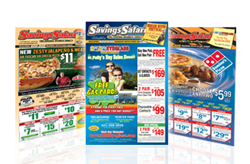
How Can Coupons Help Small Businesses Attract More Customers?
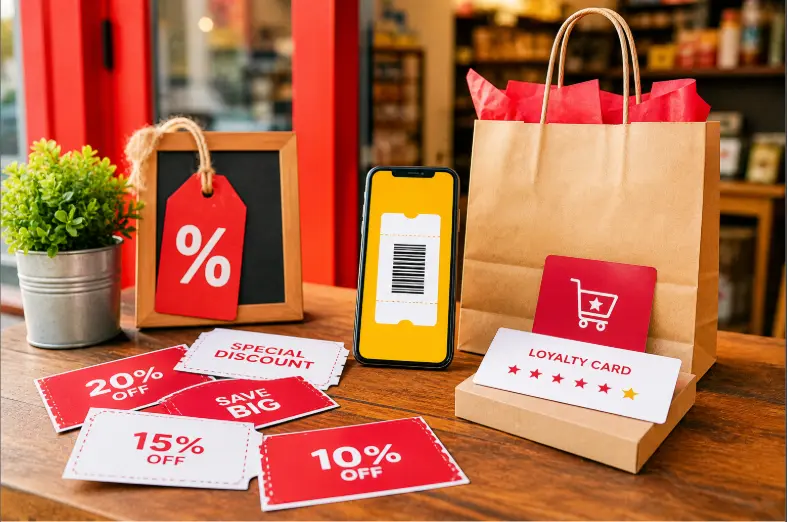
Small business marketing has one persistent challenge: getting new customers through the door before bigger competitors with larger budgets do. Rising ad costs and shrinking attention spans make it harder every year. Coupons cut through that noise. They’re not outdated they’re one of the most psychologically effective tools in a small business’s arsenal. When deployed with strategy rather than desperation, coupons drive new customer acquisition, increase basket size, and build the kind of loyalty that compounds over time.
Why Coupons Still Work in Small Business Marketing
Discounts work because they trigger an immediate shift in how customers evaluate a purchase. A coupon reduces perceived risk the customer feels they’re getting more than they’re paying for, which lowers hesitation and speeds up decisions. For small business marketing, this is critical: you’re often asking someone to try you for the first time over a more familiar competitor. A well-placed offer removes the friction that stops them from making that switch. Coupons also create a sense of exclusivity especially when they’re targeted making customers feel valued before they’ve even walked in.
How Discounts Influence Customer Buying Decisions
Three psychological forces make discounts so effective. First, FOMO a limited-time offer creates urgency that pushes people to act now rather than later. Second, price anchoring showing the original price alongside the discounted price makes the deal feel larger, even on a modest markdown. Third, instant gratification customers get an immediate win, which creates a positive emotional association with your brand from the very first interaction. Understanding these triggers lets you design offers that convert, not just attract attention.
Effective Coupon Marketing Strategy for Small Businesses
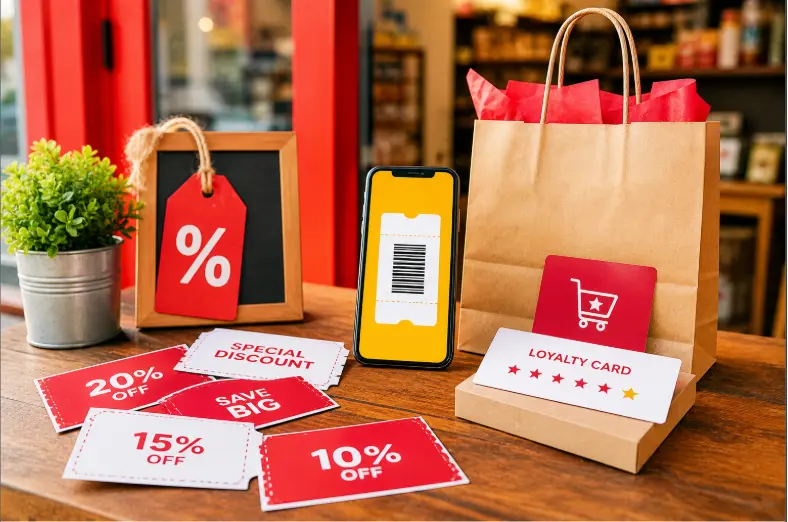
A coupon marketing strategy should be deliberate, not reactive. Random discounts train customers to wait for sales and erode your margins. Instead, build offers around specific business goals:
- First-time customer discounts: Lower the barrier to trial. A “10% off your first order” offer removes the biggest objection new customers have.
- Limited-time offers: Set a hard deadline (48 hours, end of the month) to create urgency and drive immediate action.
- Loyalty rewards: Give existing customers a reason to return. A “spend $100, get $15 off your next visit” structure drives repeat business without devaluing your core pricing.
- Referral coupons: Reward customers who bring in new ones. This turns your existing base into an acquisition channel.
The goal is offers that serve a purpose not just fill a slow week.
Digital Coupon Marketing: Reaching Customers Online
- Email campaigns: Send exclusive coupon codes to your subscriber list. Segment by purchase history to make offers feel personal and relevant.
- Social media promotions: Share time-limited discount codes on Instagram, Facebook, or LinkedIn. Stories and countdown stickers add urgency.
- Website popups: An exit-intent popup offering a first-time discount captures visitors who are about to leave without purchasing.
- Google Business Profile: Post offers directly on your GBP listing so customers searching locally see your deal before clicking to your site.
Digital channels give you trackability that offline flyers never could every click and redemption is measurable.
Creative Small Business Marketing Ideas Using Coupons
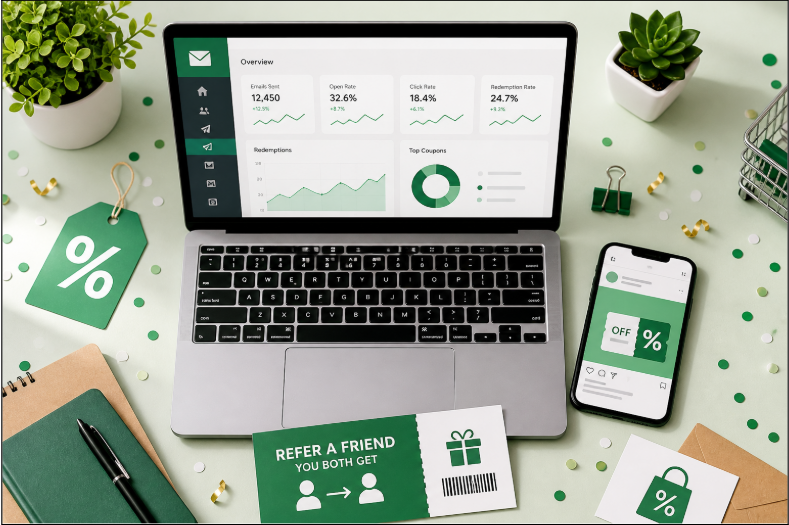
The best small business marketing ideas use coupons as a mechanism, not just a markdown. Try these formats:
- Bundle offers: “Buy any 2 services, get 20% off” increases average order value while giving customers a sense of savings.
- Seasonal promotions: Tie offers to real moments (back to school, local events, holidays) to make them feel timely and relevant.
- Referral coupons: Give existing customers a unique code to share. When a friend redeems it, both parties get a reward. This creates viral, word-of-mouth acquisition at minimal cost.
Milestone discounts Reward customers on their birthday or anniversary with your business. It feels personal and drives a high redemption rate.
How to Run Successful Marketing Campaigns with Coupons
Effective marketing campaigns with coupons don’t happen by accident. Follow this framework:
- Define the goal: New customer acquisition? Re-engaging lapsed customers? Increasing average spend? Your offer should match the objective.
- Know your audience: Segment your list. A discount on kids’ products sent to your entire database wastes budget and feels irrelevant to most recipients.
- Set a budget ceiling: Decide the maximum discount you can absorb while still hitting margin targets.
- Choose your channel: Email, social, in-store, or all three. Match channel to where your audience actually spends time.
Track every redemption Use unique codes per channel so you know exactly what’s working. Without tracking, you’re guessing.
Common Mistakes to Avoid in Coupon Marketing
- Over-discounting: Constant heavy discounts erode perceived value and attract deal-seekers who never pay full price
- Poor targeting: Sending the same offer to everyone ignores intent and wastes budget
- No tracking: Running campaigns without unique codes or UTMs means no data to optimize from
- Inconsistent branding: Coupon creatives that don’t match your brand identity look untrustworthy and reduce redemption rates
Avoid these and your coupon campaigns will build equity, not just traffic.
Conclusion
Coupons remain one of the most cost-effective tools in small business marketing when used with intention. They lower barriers, drive urgency, and create positive first impressions that turn into long-term customers. The key is strategy: know your goal, target the right audience, track results, and optimize each campaign. Start with one offer, measure it, and scale what works. Your next wave of customers is closer than you think.
Frequently Asked Questions
Q1. Do coupons really work for small businesses?
Yes. Coupons reduce purchase hesitation, attract new customers, and drive repeat visits especially when tied to a clear strategy
Q2. What type of coupon works best for new customer acquisition?
First-time customer discounts (percentage off or fixed amount) have the highest conversion rate for bringing in new buyers
Q3. How much should I discount without hurting margins?
Start with 10–15%. Calculate your break-even point first and never discount below your cost of goods plus minimum acceptable margin.
Q4. What’s the best platform for digital coupon marketing?
Email is the highest ROI channel. Combine it with social media posts and website pop-ups for maximum reach.
Q5. How do I track coupon redemptions?
Use unique promo codes per channel (e.g., EMAIL10, INSTA10) and track them in your POS or e-commerce backend.
Business Marketing coupon marketing strategy marketing campaigns small business marketing ideas