Direct Mail Magazine vs. Digital Ads: What Works Best for Businesses?
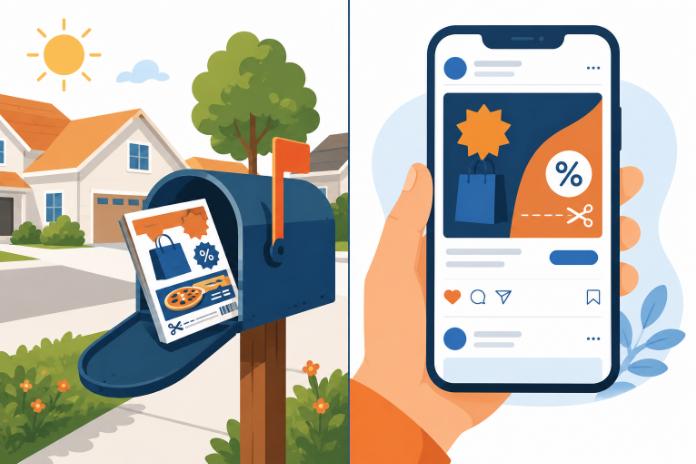
Local businesses face a real choice when allocating their advertising budget: invest in direct mail magazine advertising that lands physically in a customer’s hands, or go digital with targeted online ads that follow people across devices. Neither is universally better — but one is almost certainly a better fit for your business right now.
This post breaks down direct mail magazine vs digital ads across the factors that actually matter for local advertisers — reach, cost, trust, and measurable return so you can spend smarter.
What Each Advertising Method Actually Means
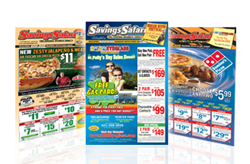
Direct mail magazine advertising is a local advertising method where a printed publication — typically a coupon magazine or savings booklet — is delivered by post to households in a defined geographic area. Businesses pay for ad space in that publication and get their offer in front of every household on the mailing list, whether or not those residents were actively searching.
Digital ads, by contrast, are paid placements on platforms like Google, Facebook, or Instagram that target users based on location, demographics, search behaviour, or interests. They appear on screens, not letterboxes — and they require the audience to be online at the right moment.
Both are legitimate local advertising methods. The difference is in how, when, and why they reach your customer.
Reach and Targeting: Who Actually Sees Your Ad
Direct mail magazines cover a fixed geographic radius. Every household in the distribution zone receives the publication regardless of age, online behaviour, or device usage. For businesses targeting older demographics or residents who aren’t heavy social media users — think home services, healthcare, or local dining — that blanket reach is genuinely valuable.
Digital ads offer surgical targeting. You can limit spend to a specific zip code, age bracket, income range, or even people who’ve visited your website before. That precision reduces waste — but it also means you only reach people the algorithm decides to show your ad to, and that population shifts constantly.
Which reach model suits your business:
- Broad household reach needed → direct mail magazine wins
- Specific demographic or behaviour targeting needed → digital ads win
- Older or less digitally active local audience → direct mail wins
- Retargeting past website visitors or customers → digital ads win
- New business with no existing audience data → direct mail provides guaranteed impressions
Cost Comparison: What You’re Actually Paying For
Direct mail magazine advertising typically involves a fixed placement fee per issue — predictable, with no cost-per-click variable. Once your ad is printed and distributed, your spend is locked and your impressions are guaranteed. Every household on the list receives the publication.
Digital ads operate on auction-based pricing. Cost-per-click (CPC) in competitive local categories — insurance, legal, home improvement — has risen significantly. You can set a daily budget, but that budget buys fewer and fewer clicks as competition increases. You also pay for impressions that never convert if your targeting or creative isn’t dialled in.
The honest comparison: direct mail magazine advertising has a higher upfront cost per campaign but a predictable, guaranteed distribution. Digital ads can start cheaper but scale in cost quickly and require ongoing management to maintain performance. See our direct mail magazine advertising options
Trust and Engagement: Print vs Digital Marketing Psychology
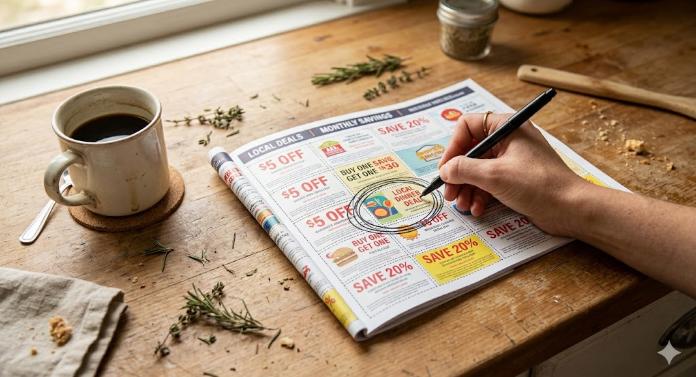
Print vs digital marketing isn’t just a format debate — it’s a psychology debate. Physical mail has a tactile quality that screens don’t. A coupon booklet sitting on a kitchen counter gets looked at multiple times before it’s discarded. A Facebook ad disappears from the feed in seconds and is forgotten just as fast.
Research consistently shows that direct mail generates higher recall than digital ads. Consumers are more likely to act on a physical offer they can touch, clip, or stick to the fridge than a banner ad they scroll past. For businesses whose offer is price-driven — discounts, seasonal promotions, service packages — direct mail magazine advertising puts that offer somewhere it can be seen repeatedly without any additional spend.
That said, digital ads excel at immediacy. A Google Search ad shown to someone actively searching “pizza delivery near me” captures intent at exactly the right moment — something a monthly mail drop can’t do.
Direct Mail Marketing Benefits That Digital Can’t Replicate
The direct mail marketing benefits most often overlooked by businesses chasing digital ROI:
Zero algorithm dependency. Your ad reaches every household in the distribution zone. There’s no bidding war, no audience shrinkage, no platform policy change that cuts your reach overnight.
Longer shelf life. A printed coupon magazine stays in a home for days or weeks. Digital ads have a lifespan measured in seconds.
Higher trust signals. Physical advertising is perceived as more legitimate by older demographics and less digitally savvy consumers — a meaningful edge in local service markets.
Bundled local visibility. When your ad appears alongside other trusted local businesses in a community coupon magazine, it benefits from the credibility of the publication itself.
Frequently Asked Questions
What is direct mail magazine advertising?
Direct mail magazine advertising is a form of print marketing where businesses promote their products or services through magazines delivered directly to targeted households or local audiences.
Are direct mail magazines effective for local businesses?
Yes. Direct mail magazines can help local businesses reach targeted customers, increase brand awareness, promote special offers, and stay visible within their communities.
How does direct mail magazine marketing compare with digital advertising?
Direct mail magazine marketing provides a physical experience that customers can keep and revisit, while digital advertising offers real-time targeting, interaction, and online tracking. The better option depends on the business’s audience, goals, and budget.
What are the benefits of using direct mail magazines for marketing?
Key benefits include targeted local reach, tangible engagement, longer-lasting visibility, opportunities for multiple advertisements, and the ability to combine useful content with promotions and offers.
Is direct mail magazine marketing better than digital ads?
Neither channel is universally better. Direct mail magazines can be especially useful for reaching local households, while digital ads are valuable for precise online targeting and immediate engagement. Combining both can create a stronger marketing strategy.
How much does direct mail magazine advertising cost?
The cost varies based on factors such as magazine size, printing, distribution volume, geographic coverage, design, and advertising placement. Businesses can manage costs by targeting specific areas and audiences.
How can local businesses measure direct mail magazine results?
Businesses can track results using unique coupon codes, QR codes, dedicated landing pages, promotional offers, and campaign-specific phone numbers. These methods help connect responses and conversions to the direct mail campaign.
Who can benefit from direct mail magazine marketing?
Restaurants, retailers, home service providers, real estate companies, healthcare businesses, professional services, and other local businesses can use direct mail magazines to reach customers in specific geographic areas.
The Bottom Line for Local Advertisers
Direct mail magazine vs digital ads isn’t an either/or decision for most local businesses — it’s a sequencing and budget question. If you need guaranteed household reach, a longer-lasting physical presence, and zero dependence on algorithms, direct mail magazine advertising delivers something digital simply can’t. If you need real-time intent targeting or rapid testing, digital fills that gap.
The smartest local advertisers use print to build awareness and trust across the full household, then reinforce with digital to capture the moment of decision.
Savings Safari delivers your offer directly to local households across your target area — no algorithm, no auction, no guesswork. Get your business in front of local customers
coupon marketing strategies direct mail marketing strategies hyperlocal marketing strategies local marketing strategies