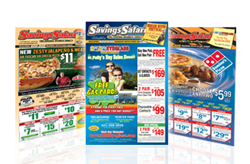
How to Choose the Right Magazine Advertising Strategy

Most businesses that try magazine advertising and walk away disappointed made the same mistake: they treated it like a one-time experiment rather than a planned strategy. A single ad placed once, with no clear offer and no follow-through, rarely moves the needle. A well-structured magazine advertising strategy with the right placement, a compelling offer, and consistent presence is a different thing entirely.
This post walks you through how to build one that actually works, whether you’re advertising locally for the first time or refining an existing print approach.
What a Magazine Advertising Strategy Actually Involves
A magazine advertising strategy is a planned approach to using print ad placements to reach a defined audience consistently, with messaging and offers designed to drive a specific business outcome calls, visits, redemptions, or brand recall.
It’s not just picking an ad size and writing some copy. It covers four decisions that compound on each other: who you’re reaching, where your ad sits in the publication, what offer you’re making, and how long you commit to running it. Get all four right and print advertising delivers measurable, repeatable results.
Step 1 Define Your Audience Before You Book Anything
The single biggest print advertising tip most small businesses ignore is this: know exactly who receives the publication before you spend a dollar. Magazine ad placement strategy starts with distribution, not design.
Ask the publication for a clear breakdown of their distribution zone, household count, and demographic profile. A local coupon magazine distributed to 30,000 households in your service area is worth more to a home services business than a regional lifestyle magazine with 80,000 readers spread across three counties you don’t serve.
Questions to ask any publication before booking:
- What is the total verified distribution and geographic coverage?
- Is distribution by direct mail to households or by rack/pickup?
- What is the typical reader demographic age, homeownership, household income?
- How often is the publication distributed monthly, quarterly?
- Can you provide examples of ad performance from similar businesses?
Direct mail distribution to a fixed household list is the gold standard for local ads planning. It guarantees your ad reaches every address in the zone no algorithm, no opt-in required.
Step 2 Choose Ad Placement Strategically, Not by Price
Ad size and position within a publication significantly affect response rates. This is where most small businesses default to the cheapest option and then wonder why results were flat.
Front covers, back covers, inside front, and inside back positions consistently outperform interior placements because readers encounter them first and last the positions with highest natural dwell time. Full-page and half-page ads generate more recall than quarter-page or strip ads, not just because they’re larger but because they allow enough creative space to communicate a complete, compelling offer.
If budget limits you to a smaller format, prioritise placement over size. A quarter-page ad on the inside front cover will outperform a half-page buried in the middle of the publication.
For local ads planning, the practical rule is: book the best position you can afford consistently, rather than the largest size you can afford once.
Step 3 Build Your Offer Around a Single, Clear Action
Print advertising tips almost universally point to the same creative mistake: too many messages in one ad. A phone number, a website, three services, a tagline, and a seasonal discount crammed into one layout gives the reader no clear next step so they take none.
Every magazine ad should be built around one offer and one call to action. For small businesses, the most effective formats are:
- A specific discount tied to the publication “Show this ad for 15% off” creates a trackable redemption and a reason to act
- A limited-time service offer creates urgency without discounting your standard rates permanently
- A free consultation or assessment effective for service businesses where the first conversation drives conversion
The offer should be something the reader can act on immediately or save for later. A coupon they can clip or photograph gives the ad a second life beyond the first read-through.
Step 4 Commit to Consistency Over One-Off Placements
This is the most important small business advertising tip in print: frequency builds trust. A reader who sees your business advertised in three consecutive issues is significantly more likely to call than one who sees a single ad once.
Consumer psychology research consistently shows that repeated brand exposure even passive exposure through a familiar ad builds the familiarity and trust that drives first-time purchases. In local markets where word-of-mouth and recognition carry enormous weight, consistent magazine presence signals stability and legitimacy.
The practical implication for marketing strategy: if your budget only allows for one or two issues, consider holding off until you can commit to a minimum of three to four consecutive placements. A short, consistent run outperforms a sporadic one-off every time.
Step 5 Measure What’s Actually Working
Magazine advertising is often dismissed as unmeasurable but that’s only true if you don’t build tracking into the campaign from the start.
Practical ways to track magazine ad performance:
- Unique promo code or offer “mention SAVINGS25 for your discount” isolates magazine-driven calls
- Dedicated phone number or landing page a trackable number or URL used only in the print ad makes attribution clean
- Direct ask at point of sale training staff to ask “how did you hear about us?” costs nothing and captures data consistently
- Redemption tracking for coupon-format ads, count redemptions per issue to compare offer performance over time
None of these require sophisticated software. A simple spreadsheet tracking redemptions and new customer source by month gives you enough data to evaluate what’s working and optimise your next placement.
Frequently Asked Questions
How many times should I run a magazine ad before evaluating its performance?
Run the same ad or a closely related version for at least three consecutive issues before drawing conclusions. One placement rarely generates enough response data to judge effectiveness. Consistent exposure builds the recognition that drives action, and three issues gives you a fair baseline for comparison.
What makes a magazine ad effective for a small local business?
The most effective local magazine ads combine a single clear offer, a specific call to action, and enough white space for the message to breathe visually. Cluttered ads with multiple messages underperform consistently. A focused discount or time-limited offer tied to the publication always outperforms a generic brand awareness placement.
Is magazine advertising worth it for a business with a small budget?
Yes, if you prioritise placement and consistency over size. A smaller ad in a high-traffic position run consistently across multiple issues will outperform a large one-off placement. Start with the minimum viable commitment typically three issues and track redemptions to build the case for continued investment.
How do I choose between different local magazines or publications?
Prioritise verified direct mail distribution over rack distribution, geographic coverage that matches your actual service area, and a reader demographic that aligns with your customer profile. Ask for a media kit and distribution verification before booking reputable publications will provide both without hesitation.
Building a Strategy That Compounds Over Time
A magazine advertising strategy that works isn’t complicated but it does require intention. Define your audience first, book the best placement your budget allows consistently, build every ad around a single offer and clear action, and track redemptions from day one.
The businesses that get the most from print advertising aren’t necessarily spending the most. They’re the ones showing up consistently, with a clear message, in front of the right local households issue after issue.
Savings Safari puts your business directly in front of local households across your target area, every single issue.
coupon marketing strategies direct mail marketing strategies hyperlocal marketing strategies local marketing strategies