How to Track Coupon Campaign Performance for Local Businesses
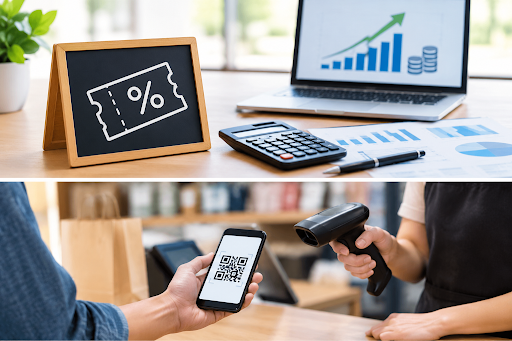
Coupons can help local businesses attract new customers, increase store visits, and encourage repeat purchases. However, offering discounts is only one part of a successful marketing strategy. Business owners also need to understand whether their promotions generate enough sales to justify the cost.
Tracking coupon campaign performance helps businesses measure redemptions, identify effective marketing channels, and calculate return on investment (ROI). Whether you own a restaurant, salon, retail shop, or home service business, the right tracking methods can help you make better marketing decisions.
For businesses using print advertising and digital promotions, platforms such as Savings Safari provide opportunities to reach local customers through magazine advertising and online offers.
Measuring the results of those promotions helps business owners understand what works and where to focus their advertising budget.
What Is Coupon Campaign Tracking?
Coupon campaign tracking is the process of measuring how customers discover, use, and respond to promotional offers, including current coupons. It connects coupon distribution with actual customer activity, sales, and business results.
For example, a local restaurant offering 15% off can track how many customers redeem the coupon, how much they spend, and whether they return for another visit.
The main goal is to determine whether a coupon campaign generates profitable sales rather than simply distributing discounts.
5 Ways to Track Coupon Redemptions
Choosing the right coupon redemption tracking methods depends on how your business distributes offers. Here are five practical approaches.
1. Use Unique Coupon Codes
Create a different coupon code for each marketing channel. For example, a salon could use MAGAZINE15 for print advertising, SOCIAL15 for social media, and EMAIL15 for email promotions.
When customers redeem these codes, you can identify which channel generated each transaction. This is one of the simplest ways to compare campaign performance.
2. Track Redemptions at the Point of Sale
A point-of-sale (POS) system can record coupon usage, discount amounts, transaction values, and purchase dates. Ask employees to enter the correct coupon code whenever a customer redeems an offer.
These records help businesses monitor redemption activity and compare coupon sales with regular purchases. Businesses interested in promoting their offers can also learn more about advertising with Savings Safari.
3. Use QR Codes for Digital Coupons
QR codes make it easier for customers to access offers from printed advertisements, flyers, posters, or digital campaigns.
Assign a unique QR code to each campaign or advertising placement. Track scans separately from completed redemptions because scanning an offer does not necessarily mean a customer made a purchase.
4. Track Website Traffic With UTM Parameters
If your coupon appears on a website or digital advertisement, use UTM parameters to identify traffic sources in Google Analytics.
For example, a tracked link can distinguish visitors who arrive through an email campaign from those who visit through social media. Combine this information with coupon and sales records to understand which channels lead to conversions.
5. Ask Customers Where They Found the Offer
Not every customer will use a trackable code, especially when redeeming a printed coupon. Train staff ask, “Where did you hear about this offer?”
Record responses consistently and compare them with redemption data. This simple method can help businesses measure the influence of print advertising, referrals, and local promotions.
Key Coupon Marketing Performance Metrics to Measure
Effective coupon marketing performance metrics should measure both customer response and business profitability.
| Metric | What It Measures |
| Redemption rate | Percentage of distributed coupons redeemed |
| Revenue generated | Sales associated with coupon transactions |
| Average order value | Average amount spent per transaction |
| Customer acquisition | Number of new customers attracted |
| Repeat purchase rate | Percentage of coupon customers who return |
| Campaign cost | Total cost of advertising and discounts |
| Return on investment | Financial return relative to campaign cost |
Tracking these metrics together provides a clearer picture than counting coupon redemptions alone.
How to Calculate Coupon Campaign ROI
Measuring coupon campaign ROI helps determine whether a promotion delivers enough financial value to justify its cost.
A practical formula is:
ROI (%) = (Incremental Profit − Campaign Cost) ÷ Campaign Cost × 100
Incremental profit means the additional profit generated because of the campaign, after accounting for relevant costs such as discounts and product or service delivery.
Example: Suppose a local retailer spends $300 on a coupon campaign and earns $900 in additional profit after accounting for discounts and other relevant costs.
ROI = ($900 − $300) ÷ $300 × 100 = 200%
This means the campaign generated $2 in net return for every $1 invested.
For accurate results, estimate the sales that would have occurred without the promotion. Otherwise, the campaign may receive credit for purchases customers would have made anyway. Businesses can also explore how small businesses can attract more customers with coupons to discover additional ways to use coupon promotions effectively.
How Local Businesses Can Improve Coupon Campaign Performance
Once you have collected campaign data, use it to improve future promotions.
- Compare channels: Identify whether print advertising, email, social media, or website offers generate more profitable customers.
- Test different offers: Compare percentage discounts, fixed-dollar savings, and minimum-spend promotions.
- Monitor customer spending: Check whether coupon users spend more or less than regular customers.
- Encourage repeat visits: Offer loyalty rewards or follow-up promotions to eligible customers.
- Review results regularly: Monitor redemptions during the campaign and evaluate profitability after it ends.
For example, a restaurant may discover that a smaller discount with a minimum purchase requirement produces more profit than a larger discount without spending limits.
Businesses advertising through Savings Safari can apply the same measurement principles to evaluate how their local advertising and coupon offers contribute to customer inquiries, visits, and sales.
Common Coupon Tracking Mistakes to Avoid
Even a well-designed promotion can produce misleading results if tracking is inconsistent.
Avoid these common mistakes:
- Using the same coupon code across every marketing channel.
- Counting coupon views or QR scans as completed sales.
- Ignoring discount costs and profit margins.
- Failing to record coupon redemptions at checkout.
- Measuring immediate sales without checking repeat purchases.
- Extending expired offers without updating campaign records.
Consistent tracking helps business owners compare campaigns fairly and allocate their marketing budget more effectively.
Conclusion
Tracking coupon campaign performance allows local businesses to understand which promotions attract customers, generate sales, and support long-term growth. Unique coupon codes, POS reports, QR codes, website analytics, and customer feedback provide practical ways to measure results.
By monitoring redemption rates, average order value, customer retention, and ROI, businesses can move beyond offering discounts and start building more effective marketing campaigns.
For local businesses using Savings Safari to promote their offers, combining advertising reach with consistent performance tracking can help inform future marketing decisions and improve campaign effectiveness. Businesses can contact us today to learn more about its advertising opportunities.
Frequently Asked Questions
1. How do you track coupon campaign performance?
Track unique coupon codes, completed redemptions, transaction values, customer acquisition, and campaign costs. Compare these results across marketing channels to identify the most effective promotions.
2. What is a coupon redemption rate?
A coupon redemption rate is the percentage of distributed coupons that customers actually use. It is calculated by dividing redeemed coupons by distributed coupons and multiplying by 100.
3. How do you calculate coupon campaign ROI?
Subtract campaign costs from the incremental profit generated, divide the result by campaign costs, and multiply by 100 to calculate ROI as a percentage.
4. What are the best coupon redemption tracking methods?
Unique coupon codes, POS systems, QR codes, UTM tracking, and customer surveys are practical methods. Combining several methods can provide a more complete view of campaign performance.
5. Which metrics matter most in coupon marketing?
The most useful metrics include redemption rate, incremental profit, average order value, customer acquisition cost, repeat purchase rate, and campaign ROI.
6. Can small businesses track coupon campaigns without expensive software?
Yes. Small businesses can start with a spreadsheet recording coupon codes, redemption dates, transaction values, discounts, and advertising costs. A POS system or analytics platform can be added as tracking needs grow.